


Star Trek™ Timelines
3.715.53K Reviews
App Specs
- Version
- 12.2.1
- Updated On
- License
- Free
- Downloads
- 5,000,000+
- Developer
- Tilting Point
- Categories
- Role Playing
- Platform
- Android
Screenshots
 Analysis by AppCompare
I approached Star Trek™ Timelines as a fan-friendly role-playing game rather than a pure space-flight simulator, and that distinction shapes the whole experience. Its appeal is less about steering through open space and more about assembling a crew, weighing their abilities, and deciding where to send them. I’d recommend it to someone who enjoys collecting familiar faces and making small tactical choices between missions, though it asks for more patience than a quick arcade game.
It is a free game from Tilting Point, with optional in-app purchases ranging from $0.99 to $399.99 per item. That wide range is worth noticing before you start: spending is optional in the basic sense, but the presence of costly purchases may feel uncomfortable if you prefer games that keep monetization out of sight. The game is rated Everyone 10+, and it suits players who are comfortable with strategy and progression systems rather than those looking for a story that moves at a fixed pace.
What spending does—and doesn’t—tell you
I can judge the purchase range, but not what any particular item contains or how much progress it changes. I wouldn’t assume that paying is required, nor promise that every part of the game can be completed at the same pace without spending. If you’re cautious, the practical approach is to begin without buying anything, learn how the crew and mission loop feel, and decide later whether an optional purchase addresses a real frustration for you.
The game has an average rating of 3.7 from around 98,000 ratings, alongside roughly 16,000 written reviews, and it has passed five million installs. Those figures suggest a substantial audience, not a guarantee that its style will suit every player. It first appeared on January 13, 2016, and version 12.0.1 is the current release. I’d treat that long-running presence as context for an established game, while still judging it by whether its routine fits your own time and tastes.
The Universe Awaits
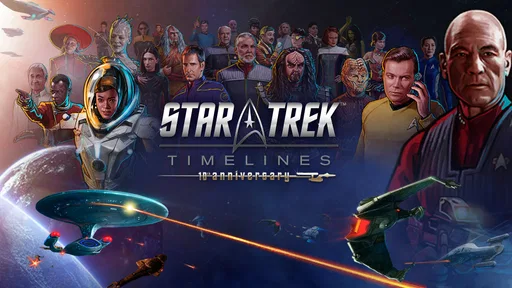
Right off the bat, what grabbed me was the sheer scope of the game. You’re not just stuck on a single ship or dealing with one crew; oh no, you get to explore multiple timelines and interact with an array of iconic characters from the entire franchise. We’re talking about Kirk, Picard, Janeway, and many more. It’s like having the best of every generation at your fingertips. The game does a fantastic job of making you feel like you’re part of this expansive universe.
Gameplay Mechanics
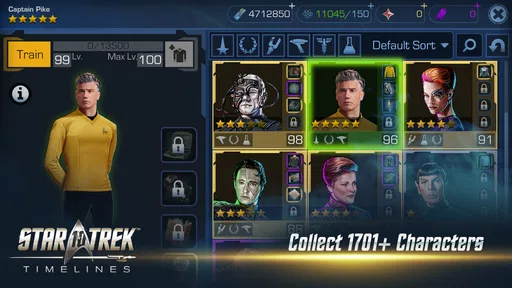
Now, let’s talk about how it plays. The gameplay is a mix of strategy and role-playing, which is kind of the secret sauce here. You build your crew, level them up, and send them on missions. Each mission has its own set of challenges, and the outcome depends on the skills of your crew members. You have to think about who to send and how to equip them, which adds a layer of strategy that keeps things interesting.
One useful habit is to pause before committing a particularly capable crew member to a task and consider which other job may need that same strength. That kind of roster planning matters more than simply sending the most familiar character every time. If a mission does not go the way you hoped, I’d treat it as information about your team’s fit rather than a reason to spend immediately. Reconsidering who goes where is a low-cost first response, and it helps you understand the role-playing layer instead of letting the game become a sequence of automatic taps.
Worth Reading Before You Choose

EA SPORTS FC Mobile 26 Is a Bigger Football Game, but It Takes Time

Flipboard Shows What News Apps Must Do Beyond the Feed

Switching to Android Auto Means Rethinking Your Driving Routine

Google Calendar Makes a Crowded Week Easier to Manage

Ludo King Makes the Most of the Minutes Between Plans

Baby Panda World Brings Quick Play to Modern Phones, but Its Game Library Feels Busy
For a realistic short session, I’d open the game during a quiet break, check which missions are available, choose a crew with the right skills, and then leave longer-term progress for a later visit. The game’s appeal is that the decisions can be made in pieces; the trade-off is that players who want one continuous, tightly directed adventure may find this rhythm less satisfying. If you only have a few minutes, focus on one clear task rather than trying to manage every part of the roster at once.
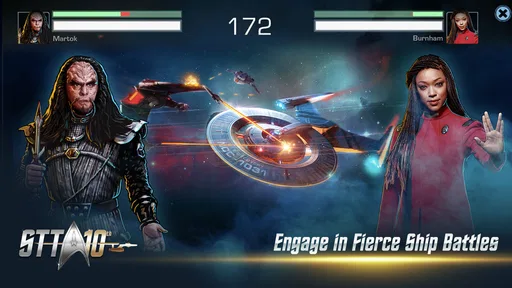
And can we talk about the space battles for a second? They’re pretty epic. You’ve got to command your ship through tactical skirmishes, and the visuals are nothing short of stunning. It’s like being in the middle of a Star Trek episode, right on your phone.
How it compares with other role-playing games
Compared with a conventional fantasy role-playing game, this one gets much of its personality from recognizable Star Trek characters and the pleasure of building a crew across timelines. It is a better fit if choosing a team and sending it into varied assignments sounds more appealing than exploring a large map as one hero. Compared with a straightforward space shooter, it puts more weight on preparation and crew decisions than on continuous piloting. That distinction is useful when choosing: fans who mainly want hands-on ship control may be happier with a dedicated action game, while franchise followers who enjoy roster-building have a clearer reason to stay.
There is also a trade-off in the breadth of the setting. Seeing characters from across the franchise can make the roster feel like a celebration of Star Trek, but a player who wants a single, carefully focused storyline may find that wide scope less intimate. I’d approach it as a collection-and-mission role-playing game with a familiar universe, not as a substitute for watching an episode or playing a linear narrative adventure.
Graphics and Sound
The graphics are top-notch for a mobile game. The characters are well-rendered, and the ships look fantastic. Whether you're on the bridge or out exploring the cosmos, the visuals really bring the game to life. And let’s not forget the sound—oh man, the sound effects and music are spot on. They’ve nailed the iconic Star Trek vibe, and it adds so much to the immersion.
The presentation is most rewarding when you have time to notice the details rather than rushing through each screen. I’d use sound when I can play without disturbing anyone, since the atmosphere contributes to the sense of being aboard a ship; in a shared room or on a commute, the game’s crew choices remain the main draw even if I keep the audio low. The art and audio make the setting feel inviting, but they don’t remove the underlying need to manage a roster and accept gradual progression.
Community and Updates
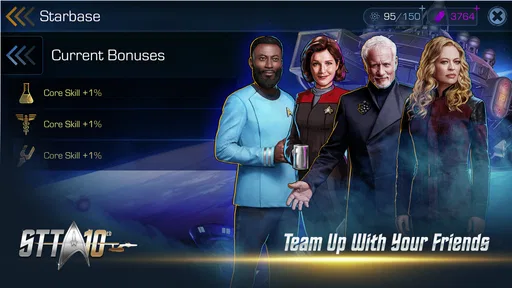
If you love connecting with other fans, Star Trek™ Timelines has got you covered. There’s a strong community of players, and you can join alliances to work together on missions. The developers seem committed to keeping the game fresh, with regular updates and events that keep you coming back for more.
Alliance play is the part I’d investigate early if playing with others is important to you. It can give the game a social purpose beyond improving your own crew, but it also makes the experience less appealing if you prefer to play entirely alone or dislike coordinating around group activity. You don’t need to treat community involvement as mandatory: first see whether the solo mission loop holds your attention, then decide whether an alliance would add something you actually want.
For a returning player, or someone opening it for the first time, the sensible way to handle events is to take them as optional reasons to check in rather than obligations. A recurring activity can make a long-running game feel lively, but it can also turn leisure into a schedule if you feel compelled to keep up. I’d set my own pace and avoid letting a calendar dictate whether I’m enjoying the game.
Who is likely to enjoy the routine?
I’d point franchise fans toward it if they like recognizing characters, comparing crew strengths, and gradually improving a team. It can also work for a strategy-minded player who doesn’t need every session to deliver a dramatic plot beat. On the other hand, I’d steer away anyone who wants a completely hands-on space-combat game, a short experience with a definite ending, or a game with no optional spending prompts. Those preferences are not flaws; they simply clash with what this particular combination of roster planning and ongoing play asks from you.
If you’re unsure whether it will fit, I’d make the first session a test of the core loop: do you enjoy picking a crew and thinking about the assignment, or are you waiting for the game to become something more like a flight game? That answer is more useful than whether the Star Trek setting appeals in the abstract. The familiar universe can get you through the door, but the repeatable decisions are what will determine whether you stay.
Final Thoughts
In the end, Star Trek™ Timelines offers a rich, engaging experience that’s hard to put down. It’s a fantastic blend of strategy, role-playing, and a healthy dose of nostalgia. If you’re a fan of the series or just looking for a new game to sink your teeth into, give this one a shot. It’s like your favorite Star Trek episodes come to life in an interactive way. So, what are you waiting for? Set phasers to fun and dive into the universe!
My trust verdict is positive but measured: I like that the central appeal is easy to understand—build a crew, make choices, and take part in a broad Star Trek setting—while the optional purchase range calls for a little restraint. I would start free, avoid buying anything just to solve a temporary setback, and only spend if I had already decided the game’s everyday loop was worth supporting. If that loop feels like chores rather than a satisfying bit of planning, there is no reason to force it; another role-playing game with a more direct story or a more active combat focus would be a better use of your time.
Pros
- Immersive storyline with original Star Trek characters.
- Strategic gameplay that challenges tactical thinking.
- Regular updates keep content fresh and engaging.
- Cross-platform play for seamless device transitions.
- Vast universe exploration with diverse missions.
Cons
- Energy system limits continuous play.
- Occasional bugs disrupt gameplay experience.
- In-app purchases can become costly over time.
- Complex mechanics may overwhelm new players.
- Requires stable internet for optimal performance.
FAQs for Star Trek™ Timelines
What is Star Trek™ Timelines about?
Star Trek™ Timelines is a strategy role-playing game that brings together characters from all eras of the Star Trek universe. Players build their crew, engage in space battles, and explore the galaxy. The game features an intriguing storyline where players must resolve conflicts across timelines using diplomacy, combat, and science.
Is Star Trek™ Timelines free to play?
Yes, Star Trek™ Timelines is free to download and play on both Android and iOS devices. However, it offers in-app purchases for various items and currency that can enhance gameplay. These purchases are optional, but they can provide advantages such as faster progress and exclusive content.
What are the main features of Star Trek™ Timelines?
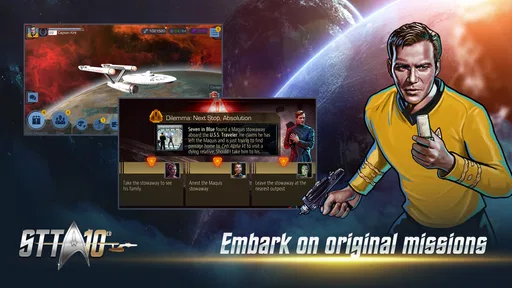
Star Trek™ Timelines includes features such as character collection, ship battles, and away missions. Players can recruit iconic Star Trek characters, upgrade their starships, and engage in tactical battles. The game also has a rich narrative experience with episodic content and events that expand the Star Trek universe.
How do the in-game purchases affect gameplay?
In-game purchases in Star Trek™ Timelines can enhance your experience by providing resources such as Chronitons, Dilithium, and character packs. While these purchases can speed up progress and unlock exclusive content, they are not necessary to enjoy the game's core features and can be bypassed with time and strategy.
Are there any connectivity requirements for playing Star Trek™ Timelines?
Yes, Star Trek™ Timelines requires an internet connection to play. The game relies on online features such as events, updates, and multiplayer interactions. A stable connection ensures you can fully experience all the interactive elements and participate in timed events or community challenges.


